Pull up three different market trackers for Issaquah in the same week and you will get three different medians. One will tell you the typical home sold for just under a million dollars. Another will put the number above $1.1 million. A third, measuring value rather than closed sales, will land somewhere in between and moving in the opposite direction. None of them are wrong. They are measuring different slices of the same city, and the seam between those slices happens to run through a very specific federal number.
That number is $1,063,750, the 2026 conforming loan limit for a single-family home in King County. It is the line the Federal Housing Finance Agency draws between a loan Fannie Mae or Freddie Mac will buy and one that has to go the jumbo route instead. Issaquah's citywide median has been hovering close enough to that line all year that the two things are, for practical purposes, the same number. That is not a coincidence worth shrugging off. It is the reason the citywide median cannot tell you much about any specific offer you are about to write.
The Disagreement Isn't About Timing
The obvious explanation for three conflicting medians would be timing. Different trackers pull their numbers on different days, and Issaquah's market moves fast enough that a few weeks can shift things. That explanation only goes so far here. A three-month median through spring landed near $999,000. A read on closed NWMLS transactions later in the summer put the figure above $1.1 million, up sharply year over year. A home-value index measuring typical worth across the whole housing stock, rather than just closed sales, sat higher still and was drifting down. These are not small rounding differences you'd expect from a few weeks of seasonal drift. They reflect different mixes of what actually sold.
Part of that mix problem is simple: Issaquah's citywide median blends single-family houses with condos and townhomes, and those two categories sell at wildly different price points. A month where more condos closed will pull the blended number down regardless of what single-family prices are doing. That's real, but it's a known distortion any agent can explain in a sentence. The more interesting distortion is structural, and it has to do with financing, not property type.
The Line Nobody Draws on a Map
Conventional mortgages that Fannie Mae and Freddie Mac will purchase are capped by that $1,063,750 figure in King County for 2026. FHA financing in the county matches the same ceiling, so a buyer putting down as little as 3.5% can also stay under that number without stepping into jumbo territory. Anything financed above it has to go through jumbo underwriting: tighter debt-to-income ratios, larger cash reserves, and pricing that moves independently of the conventional market because it can't be sold to Fannie or Freddie the same way.
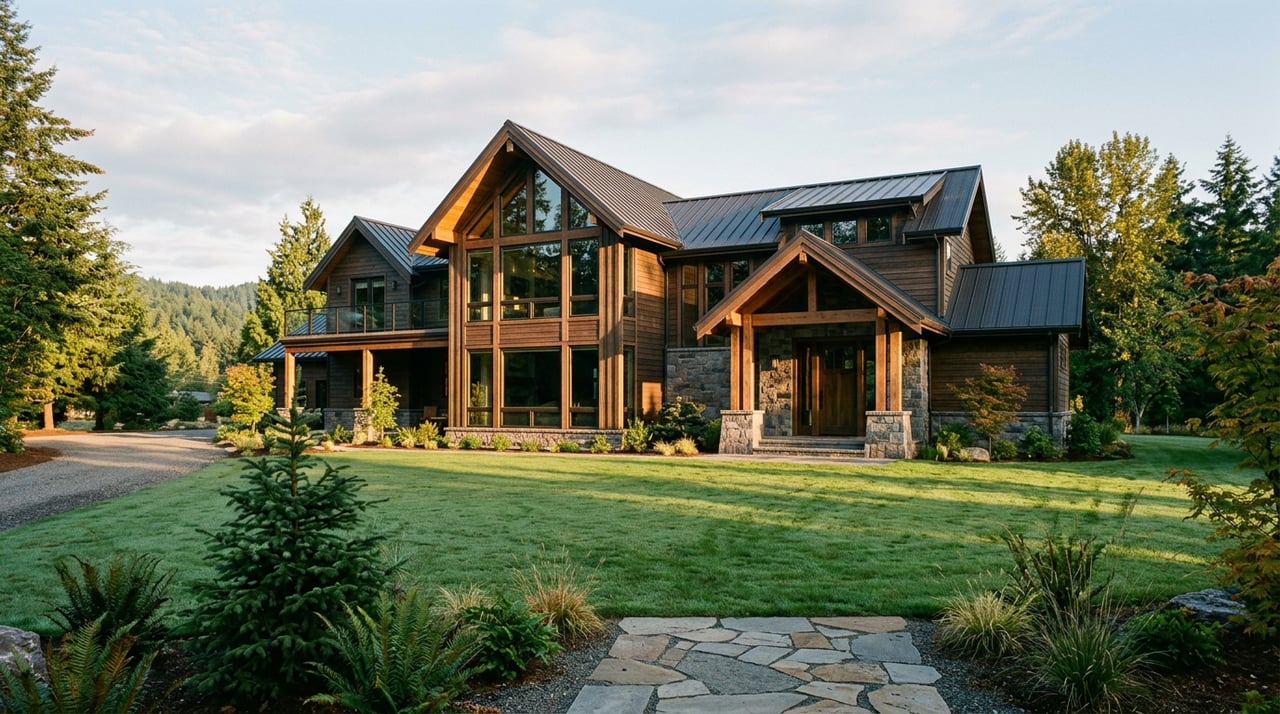
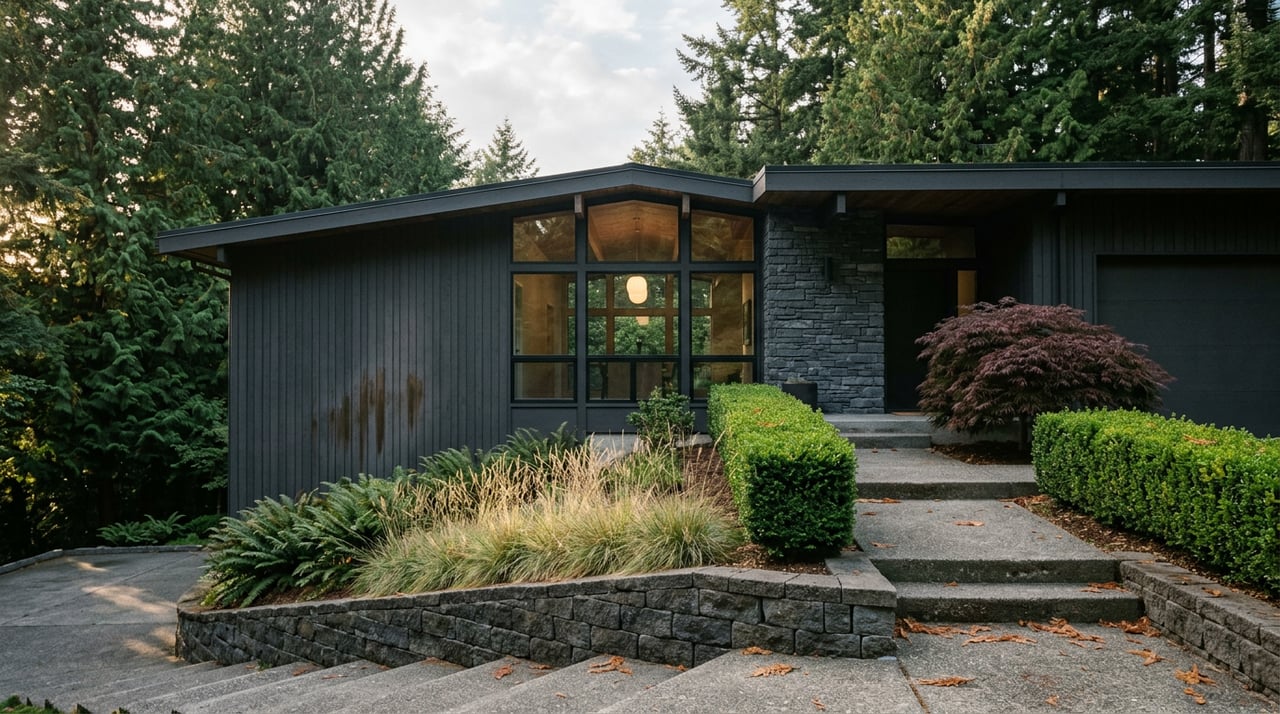
Now look at where Issaquah's home prices actually sit. Issaquah Highlands, the master-planned community anchored by Grand Ridge Plaza and Clark Elementary, posted a three-month median sale price of $1.3 million with homes going pending in around 16 days. That's well above the conforming ceiling for most buyers, especially once you're financing a typical four-bedroom home there rather than a smaller resale unit. Meanwhile, Olde Town's craftsman and mid-century housing stock, the 1920s through 1950s homes clustered near Front Street and within walking distance of Gilman Village, has been trading in an $800,000 to $1.1 million band. Most of that band sits comfortably under the jumbo line.
Two buyers who both walked into a lender's office and got approved for "around $1.1 million in Issaquah" are not shopping the same market. One is choosing between conventional comps in a broad, competitive pool. The other is already in jumbo territory, competing against a smaller and more patient set of buyers whose lenders are watching reserves and debt ratios more closely than list price.
What Your Money Buys in Each Direction
| Submarket | Typical 2026 Price Band | Position Relative to the $1,063,750 Line | What Stands Out |
|---|---|---|---|
| Issaquah Highlands | Three-month median around $1.3M | Mostly above on typical single-family purchases | 16-day median time to pending, walkable to Grand Ridge Plaza, newer construction |
| Talus | Mid-$900Ks for Copper Ridge townhomes, higher for larger homes | Straddles the line depending on size and lot | Newer construction at the base of Tiger Mountain with immediate trail access |
| Olde Town | $800K to $1.1M for character homes, renovated larger lots pushing toward $2.2M | Mostly under, until a major renovation or premium lot pushes it over | 1920s to 1950s craftsman and mid-century housing near Front Street and Gilman Village |
| Squak Mountain | Prices dipped roughly 12% year over year in early 2026, recovering since | Mostly under on standard resale stock | Larger forested lots bordering the 1,600-acre Squak Mountain State Park |
Squak Mountain, along with Sycamore and Klahanie, are the neighborhoods where buyers who are flexible on location are finding the most room to negotiate, often at prices 10 to 20% below comparable Issaquah Highlands listings while staying within the Issaquah School District. School attendance boundaries shift by parcel, so any specific boundary claim is worth verifying directly with the district rather than assuming it based on neighborhood name alone.
The condo side of the market barely touches this line at all. Issaquah's condo and townhome median has been running around $565,000, far enough under the conforming ceiling that jumbo underwriting almost never enters the conversation. The financing friction described here is really a single-family story, and it concentrates hardest at the upper end of Issaquah Highlands and the largest homes in Talus and Squak Mountain.
Why This Matters Before You Write an Offer
A buyer who treats the citywide median as a shopping budget is solving the wrong problem. The more useful question is which side of $1,063,750 your target neighborhood tends to fall on, because that answer changes what your lender will ask for and how much competition you'll face.
A few things worth working through before you start touring:
- If your target price sits within a few percent of $1,063,750 either direction, ask your lender to run both a conventional and a jumbo scenario. The difference in required reserves and debt-to-income headroom can be larger than the rate difference.
- FHA financing in King County shares the same $1,063,750 ceiling as conventional, so a 3.5% down payment can keep you out of jumbo territory even at prices that feel high.
- Neighborhoods trading mostly under the line, including Olde Town, Squak Mountain, and Sycamore, currently offer more negotiating room than Issaquah Highlands, where well-priced listings are still moving in about two weeks.
- A renovated Olde Town home on a larger lot can price its way into jumbo territory even though the surrounding neighborhood trades well under it, so don't assume location alone tells you which side of the line a specific listing sits on.
Two buyers pre-approved for the same round number are not necessarily competing for the same homes. Once you know which side of the loan limit your target neighborhood sits on, the citywide median stops being useful and the neighborhood-level numbers start doing the actual work.
A Few Questions Worth Settling Early
Does the $1,063,750 limit apply to condos too, or just houses? The same figure covers single-family homes and condos in King County under the standard one-unit category. Given that Issaquah's condo median is running around $565,000, this line rarely comes into play on the condo side.
Can FHA financing help me avoid jumbo underwriting? Yes. FHA's loan limit in King County matches the conforming ceiling at $1,063,750, so a buyer using FHA can finance up to that same number with as little as 3.5% down without triggering jumbo qualification requirements.
Will this number change before I close? FHFA resets loan limits once a year, effective January 1, and holds them through the calendar year. The $1,063,750 ceiling stays in place through the end of 2026 regardless of how home prices move month to month.
Issaquah's price story only looks confusing from the citywide altitude. Get closer to the neighborhood level and the picture sharpens considerably, especially once you know where the financing seam actually runs. If you're weighing Issaquah Highlands against Olde Town, Talus, or Squak Mountain and want help reading your specific price point against that line before you tour, Macdonald Group can walk through what your budget actually buys on each side of it.